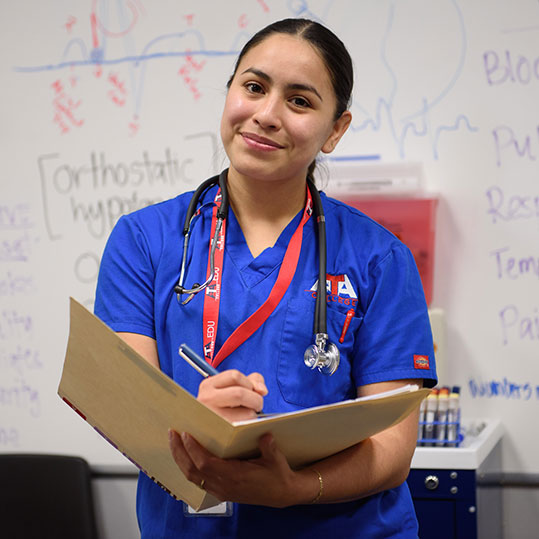

The healthcare industry relies on a dedicated team of professionals to provide quality patient care. While doctors and registered nurses often come to mind first, Certified Nursing Assistants (CNAs) are the essential frontline caregivers who support both patients and medical staff. A career as a CNA is a rewarding entry point into the nursing field, offering a direct path to making a tangible difference in people’s lives.
If you’re considering a career in healthcare, understanding the role of a CNA is a great place to start. This guide will explain what a CNA is, detail their key responsibilities, and outline the steps you can take to become one. We’ll also explore the career outlook and potential pathways for professional growth in this vital profession.
What Is a Certified Nursing Assistant?
A Certified Nursing Assistant, or CNA, is a healthcare professional who provides basic care to patients under the direct supervision of a Registered Nurse (RN) or a Licensed Practical Nurse (LPN). CNAs are often the primary point of contact for patients, helping them with daily activities and monitoring their well-being. They work in a variety of settings, including hospitals, nursing homes, long-term care facilities, and private residences.
To become a CNA, individuals must complete a state-approved training program and pass a competency exam. This certification ensures they have the necessary skills and knowledge to provide safe and effective patient care. Because of their close and consistent interaction with patients, CNAs play a critical role in observing changes in a patient’s condition and reporting them to the nursing staff.
What Does a CNA Do?
The daily responsibilities of a CNA center on direct patient care and support. Their tasks are hands-on and essential to maintaining patients’ comfort, safety, and health.
Key Job Duties and Responsibilities
While specific duties may vary depending on the work environment, a CNA’s core responsibilities typically include:
- Assisting with Daily Living Activities: They help patients with fundamental tasks they may be unable to perform independently. This includes bathing, dressing, grooming, and using the toilet.
- Mobility Support: They assist patients with moving, such as transferring them from a bed to a wheelchair, helping them walk, or repositioning them in bed to prevent bedsores.
- Serving Meals and Feeding: They ensure patients receive proper nutrition by serving meals, assisting with feeding if necessary, and monitoring their food and liquid intake.
- Taking Vital Signs: A key part of their role is measuring and recording vital signs, including blood pressure, heart rate, temperature, and respiration rate.
- Observing and Reporting: They are the eyes and ears of the nursing team. They observe patients for any changes in their physical or mental condition and promptly report these findings to an RN or LPN.
- Maintaining a Clean Environment: They help keep patient rooms tidy, change bed linens, and ensure a safe, sanitary environment.
- Providing Emotional Support: Beyond physical care, CNAs offer companionship and emotional support to patients and their families, often forming strong bonds.
How to Become a CNA
The path to becoming a Certified Nursing Assistant is straightforward and can be completed relatively quickly compared to other healthcare professions. It’s an accessible way to enter the medical field and begin gaining valuable experience.
Step 1: Meet the Prerequisites
Before enrolling in a training program, you must meet some basic requirements. Generally, you need to be at least 18 years old and have a high school diploma or GED. Some programs may also require a criminal background check and proof of immunizations.
Step 2: Complete a State-Approved CNA Program
You must enroll in and complete a training program that is approved by your state’s nursing board. These programs are offered at community colleges, vocational schools, and institutions like ATA College. The curriculum combines classroom instruction with supervised clinical practice. You’ll learn about anatomy, patient rights, infection control, and essential nursing skills.
Step 3: Pass the Certification Exam
After completing your training, the final step is to pass your state’s CNA certification exam. The exam typically has two parts: a written or multiple-choice section to test your theoretical knowledge, and a practical skills test that demonstrates your ability to perform key CNA tasks. Once you pass, your name will be added to your state’s CNA registry, and you can officially begin working.
CNA Career Outlook and Advancement
The demand for Certified Nursing Assistants is strong and expected to grow. According to the U.S. Bureau of Labor Statistics, employment for nursing assistants is projected to grow 4% from 2023 to 2033, which is faster than the average for all occupations. This growth is driven by the aging baby-boomer population and the increasing need for long-term care services.
A career as a CNA also serves as an excellent foundation for further education and advancement in the healthcare field. Many individuals start as CNAs to gain hands-on experience before pursuing roles with greater responsibility. Possible career pathways include:
- Licensed Practical Nurse (LPN): With additional education, a CNA can become an LPN, taking on more advanced clinical duties.
- Registered Nurse (RN): Many CNAs go on to earn an Associate’s or Bachelor’s degree in nursing to become an RN, opening up a wide range of specialization opportunities.
- Specialized CNA Roles: Experienced CNAs can pursue specialized certifications in areas like geriatrics, cardiology, or pediatrics to advance their careers.
What is Home Health Aide Program
A Home Health Aide (HHA) program is a specialized training curriculum designed to equip individuals with the essential skills and knowledge required to provide personal care to patients in their homes. These educational courses typically combine classroom instruction with hands-on clinical practice, covering a wide range of topics such as basic nursing skills, personal hygiene assistance, nutrition, and infection control.
Students learn how to safely assist elderly, disabled, or recovering clients with activities of daily living, including bathing, dressing, and mobility, while also monitoring vital signs and observing changes in physical or mental conditions. Upon successful completion, these programs generally prepare graduates for state certification exams, opening the door to a career focused on helping patients maintain their independence and quality of life in a comfortable, familiar environment.
Start Your Healthcare Journey Today
Becoming a Certified Nursing Assistant is a fulfilling career choice that allows you to make a direct and positive impact on patients’ lives every day. It’s an accessible entry point into the high-demand healthcare industry and provides a solid foundation for future professional growth.
If you are a compassionate person dedicated to helping others, a CNA role could be the perfect fit for you. Explore state-approved training programs, like those offered at ATA College, to take the first step toward a rewarding and stable career in healthcare.