
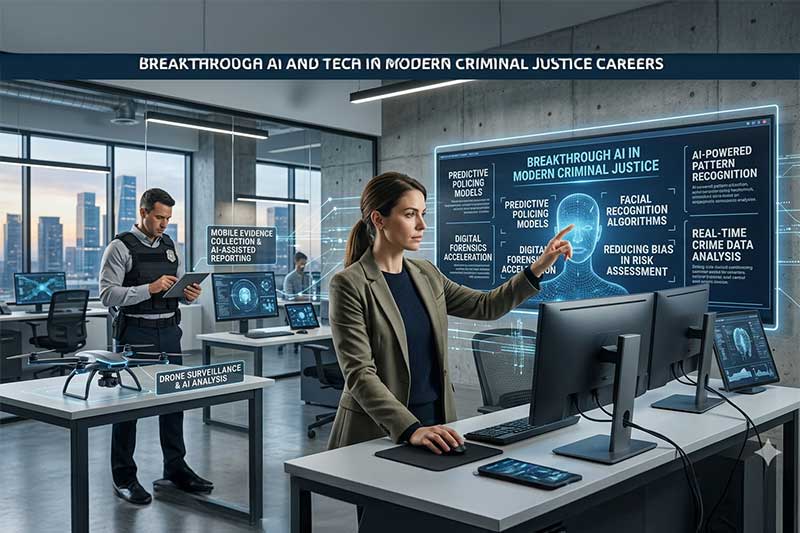
Advanced technology and AI are rapidly transforming criminal justice careers, opening new opportunities in areas like smart policing, digital forensics, and modern courtroom tools. Discover how these innovative advancements are reshaping the industry and what you need to thrive in this evolving field.
AI and Tech: The New Era of Criminal Justice Careers
Law enforcement no longer relies on paper files and traditional patrols. Today, agencies use advanced algorithms, massive databases, and real-time mapping tools to protect communities. Technology has completely changed the way police, forensic experts, and legal professionals do their jobs.
If you are considering stepping into this dynamic field, understanding the law is only one part of the equation. You must also know how to navigate the digital tools that drive modern investigations. From predictive analytics to digital forensics, technological fluency is now a core requirement for anyone looking to make a meaningful impact in public safety.
This guide explores exactly how digital innovation shapes the daily lives of criminal justice professionals. You will learn how modern tools are applied across various departments, what specific tech skills agencies look for, and how the right educational foundation can help you thrive in this rapidly evolving landscape.
AI-Powered Policing and Predictive Analytics
The most visible transformation in criminal justice happens right on the streets. Law enforcement agencies use complex data models to prevent crime before it even happens. Predictive policing software analyzes years of historical crime data, weather patterns, and local events to identify potential crime hotspots. This allows departments to allocate their resources efficiently and place officers exactly where they are needed most.
Artificial intelligence also plays a massive role in processing digital evidence. Detectives often have to sift through hundreds of hours of surveillance footage to find a single clue. AI-powered video analysis can scan these massive files in minutes, flagging specific vehicles, clothing colors, or license plates. This rapid processing saves thousands of human hours and accelerates the pace of critical investigations.
According to the National Institute of Justice, integrating advanced technologies like these allows agencies to solve complex cases faster while reducing overall crime rates. The focus is shifting from simply reacting to criminal activity to actively preventing it through data-driven insights.
Smart Tech in Crime Scene Investigation
The yellow tape surrounding a crime scene looks the same as it did decades ago, but the tools used inside that perimeter look like science fiction. Investigators now rely on technology that captures environments with stunning accuracy.
Drones fly over large outdoor crime scenes, snapping high-resolution aerial photographs that map out tire tracks and scattered evidence. On the ground, 3D laser scanners document entire rooms in minutes, creating a permanent, interactive digital twin of the scene. This allows detectives and forensic experts to “walk through” the environment weeks or even months after the physical site has been cleaned up.
If you have a strong eye for detail, understanding these tools is essential. You can learn more about this specific path by reading about Discovering Your Future in Crime Scene Investigation. The modern forensic expert pairs critical thinking with specialized software to process DNA, analyze blood spatter patterns, and trace digital footprints left on smartphones.
AI-Enhanced Legal Research and Courtroom Tools
Technology does not stop at the police station door. It follows the evidence straight into the courtroom. The legal process generates mountains of paperwork, from arrest reports to witness testimonies. Managing this information manually is virtually impossible today.
Automated case management systems allow prosecutors, defense attorneys, and judges to access secure files instantly from any location. During the discovery phase, legal teams use AI-enhanced software to scan thousands of emails, text messages, and financial records. The software flags relevant keywords and patterns, allowing lawyers to build stronger cases without spending weeks reading through irrelevant documents.
This digital shift makes the justice system faster and more transparent. It also means that paralegals, legal assistants, and courtroom clerks must be highly comfortable learning new software platforms.
Digital Solutions in Modern Corrections
The corrections system often operates out of the public eye, but it relies just as heavily on technological advancements to maintain security and support rehabilitation. Facility managers use biometric scanners to ensure secure access to restricted areas. Automated monitoring systems track the movements of inmates and staff, flagging unusual activity that might indicate a security threat.
Technology also supports life after release. Electronic monitoring tools, such as GPS ankle bracelets, provide parole officers with real-time location data. This ensures compliance with court orders while allowing individuals to return to their families and jobs. Furthermore, many facilities now offer tablet-based educational programs, giving inmates the opportunity to learn new skills and prepare for successful reentry into society.
A career in corrections requires a delicate balance of human empathy and technical proficiency. To understand the profound impact you can have in this sector, check out How a Criminal Justice Degree Changes Lives. The integration of smart monitoring tools keeps facilities safer and gives officers the data they need to make smart, split-second decisions.
Frequently Asked Questions (FAQ)
What tech skills are necessary for a criminal justice career?
Professionals need a solid understanding of database management, secure communication systems, and electronic record-keeping. Depending on your specific role, you might also need to learn how to operate dispatch software, analyze digital forensic data, or use predictive mapping programs.
Will artificial intelligence replace police officers?
No. Technology is a tool, not a replacement for human judgment. AI can analyze data and highlight patterns, but it cannot interview a terrified witness, de-escalate a domestic dispute, or make ethical decisions in the field. Criminal justice will always require compassionate, highly trained human beings.
How do I learn to use these criminal justice technologies?
The best way to prepare is through a focused educational program that blends theoretical legal knowledge with practical, hands-on training. Vocational schools and technical colleges often structure their curricula around the exact software and tools currently used by local agencies.
Step Into the Future of Public Safety
Technology changes fast, and the criminal justice system needs dedicated professionals who can keep pace. While the tools of the trade have evolved from paper maps to predictive algorithms, the core mission remains exactly the same: protecting communities, uncovering the truth, and ensuring a fair legal process.
The ATA College advantage gives you the direct, career-focused training required to thrive in this high-tech landscape. Our Criminal Justice and Public Safety Diploma program bridges the gap between traditional law enforcement principles and modern technological applications. You will learn from experienced instructors who understand what agencies demand from new hires today. We prioritize practical skills, rapid learning, and direct pathways to employment so you can step confidently into a vital career. Take control of your future and discover how ATA College can help you turn your passion for justice into a lifelong, impactful profession.