
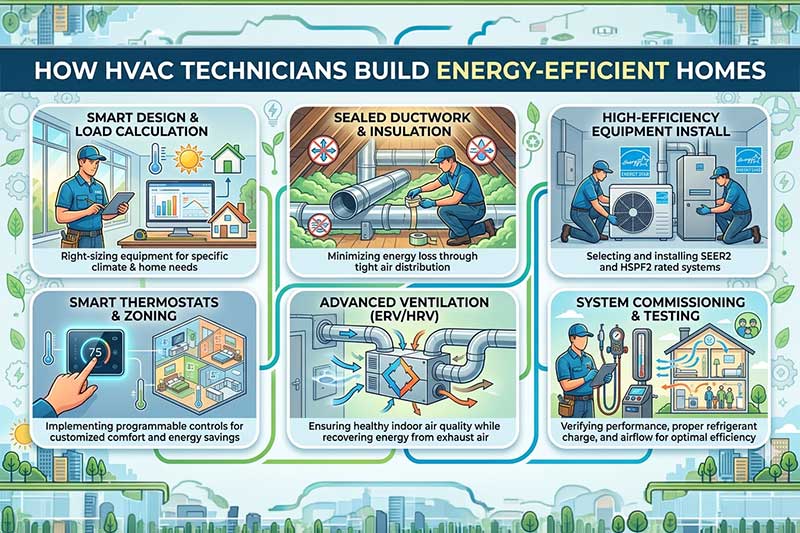
Creating an energy-efficient home goes beyond using advanced appliances—it requires the expertise of skilled HVAC technicians. Discover the essential role these professionals play in building energy-efficient homes, from ensuring systems are properly sized to installing smart technology that optimizes comfort and reduces energy waste.
The Role of HVAC Technicians in Creating Energy-Efficient Homes
Every month, homeowners open their utility bills and hope for a pleasant surprise. Yet heating and cooling a house requires a massive amount of power, often making up the largest portion of a family’s energy expenses. As utility costs rise and environmental concerns grow, families are actively looking for reliable ways to reduce their carbon footprint while keeping their living spaces comfortable.
You might think that buying a brand-new, high-efficiency air conditioner or furnace is the only step required to lower those monthly bills. Simply purchasing top-tier equipment does not guarantee lower energy consumption. A poorly installed system will still waste electricity, strain internal components, and leave certain rooms feeling drafty or overly warm.
This is exactly where skilled professionals step in to bridge the gap between high-tech equipment and real-world performance. The role of HVAC technicians goes far beyond just turning a wrench or replacing dirty filters. These certified experts act as energy consultants, system designers, and environmental stewards. They ensure that residential heating, ventilation, and air conditioning systems operate at peak performance to save homeowners money and protect the environment.
Why Household Energy Efficiency Matters
Heating and cooling account for nearly half of the energy used in a typical U.S. home. When a climate control system runs inefficiently, it forces power plants to generate more electricity, which often leads to higher greenhouse gas emissions. You can learn more about how household systems impact overall power grids through the U.S. Department of Energy’s guide to heating and cooling.
By optimizing these systems, HVAC professionals directly contribute to a more sustainable future. Less wasted power means lower greenhouse gas output. For the homeowner, it means lower monthly utility bills and a much more comfortable indoor environment.
Key Ways HVAC Professionals Optimize Home Energy
Creating a truly efficient home requires a combination of precise calculations, modern technology, and careful maintenance. HVAC technicians utilize several strategies to ensure systems run flawlessly.
Sizing Systems Correctly for the Space
One of the biggest mistakes inexperienced installers make is choosing the wrong size unit for a house. An oversized air conditioner will cool the house too quickly and shut off before it can properly remove humidity. This leads to a damp, uncomfortable living space and short-cycling, both of which damage the motor. An undersized unit will run constantly, driving up electricity bills without ever reaching the desired temperature.
Trained technicians perform detailed calculations to determine the exact heating and cooling load of a home. They account for square footage, ceiling height, window placement, and local climate patterns. This precise sizing ensures the system uses only the energy needed to keep the house comfortable.
Upgrading to Smart Technology
Modern heating and cooling equipment features incredible technological advancements. Technicians now install smart thermostats that learn a family’s daily schedule and adjust temperatures automatically. If the house is empty, the system scales back its power usage.
Some of the most exciting developments involve machine learning and automated diagnostics. If you want to understand how these tools are changing the field, check out our recent post on How Artificial Intelligence is Transforming the HVAC Industry. HVAC experts guide homeowners through these smart upgrades, helping them select the best digital tools to monitor and reduce their daily energy consumption.
Sealing Leaks and Improving Ductwork
Even the most advanced heat pump will waste energy if the conditioned air escapes into the attic or basement. Leaky ductwork can reduce a climate control system’s efficiency by up to 20 percent.
HVAC technicians carefully inspect the entire ventilation network to find gaps, loose connections, and uninsulated sections. They use specialized sealants to seal these leaks, ensuring that every ounce of hot or cold air actually reaches the living areas. They also clean the ducts to remove dust and debris that might block proper airflow, reducing the strain on the blower motor.
Regular Maintenance and Safety Checks
Neglected equipment breaks down faster and requires more power to operate. A clogged air filter forces the fan motor to work twice as hard to push air through the system. Dirty condenser coils struggle to release heat, causing the compressor to overheat and draw excess electricity.
Technicians perform seasonal maintenance to keep everything running smoothly. They clean coils, check refrigerant levels, lubricate moving parts, and calibrate thermostats. During these visits, they also handle hazardous components such as electrical wiring and combustible gases. You can read more about these critical protocols in our guide to Essential HVAC Safety Tips Every Technician Needs to Know. Consistent maintenance extends the life of the equipment and keeps the system operating at its original efficiency rating.
The Future of Sustainable Heating and Cooling
As building codes become stricter and consumer demand for green technology increases, the HVAC industry will continue to evolve. Technicians are already working with variable-speed motors, geothermal heat pumps, and solar-integrated air conditioners. These highly skilled workers are essential for transitioning our communities toward cleaner, more sustainable energy practices.
Without their expertise, even the most expensive green technologies would fail to deliver on their promises. Proper installation and diligent upkeep are the true foundations of an energy-efficient home.
Start Your Journey Toward a Rewarding Career
If you enjoy working with your hands, solving complex technical problems, and want a career that positively impacts the environment, the heating and cooling industry offers incredible opportunities. The demand for qualified professionals continues to grow as more homeowners upgrade to energy-efficient systems.
The ATA College Advantage
Taking the first step toward a successful career requires the right foundation, and ATA College is here to provide it. Our comprehensive HVAC Technician training program equips you with the hands-on experience, technical knowledge, and industry certifications needed to excel in this high-demand field. With career-focused curriculum, experienced instructors, and dedicated job placement assistance, ATA College ensures you graduate ready to step confidently into a rewarding profession. Join a community that prioritizes your success and start building a future you can be proud of today.